Fantasy Indian Cricket Blog
The Fantasy Indian Cricket blog covers IPL 2026, T20 World Cup, domestic T20, and the fantasy cricket strategy that holds up across all three. Daily captain picks, weekly differentials, monthly bankroll strategy, and quarterly meta-game analysis. Indian sub-continent cricket, written for India, from India.
Editorial · captain · differential · strategy
The Fantasy Indian Cricket blog covers IPL 2026, T20 World Cup, domestic T20, and the fantasy cricket strategy that holds up across all three. Daily captain picks, weekly differentials, monthly bankroll strategy, and quarterly meta-game analysis. Indian sub-continent cricket, written for India, from India.
Fantasy Indian Cricket Blog is one of the most-asked questions from new players on Fantasy Indian Cricket. The short answer — it depends on the contest type, the captain pick, the venue, and whether your differential plays. But the longer answer, the one that actually wins fantasy cricket contests across the 2026 Indian Premier League season, involves understanding the points system inside out, knowing how to spread your 100-credit salary cap across 11 players without leaving the back end exposed, and reading the conditions on offer — dew at Wankhede, spin grip at Chepauk, bounce at Mohali — to pick the captain that 2x-multiplies your team points.
The 2026 IPL season opens with 10 franchises, 78 league-stage fixtures, and a Rs 639.15 crore total franchise spend from the December 2025 mega auction. Rishabh Pant went to Lucknow Super Giants for a record Rs 27 crore — the most expensive Indian player in IPL history. That single buy shifted the captain-pick calculus for the entire sub-continent fantasy community. Anyone running a fantasy team with Pant as captain 2x now has the most volatile, highest-ceiling option in the league on their roster.
Indian cricket fantasy works differently from generic fantasy cricket apps. The point system rewards milestone bonuses (30-run 4 pts, 50-run 8 pts, 100-run 16 pts), strike-rate bands above 130, economy bands under 7, dot-ball discipline, and fielding excellence — a stark contrast to apps that reward only raw runs and wickets. The captain multiplier (2x) and vice-captain multiplier (1.5x) are non-negotiable levers. Lock them in 15 minutes before toss. No late changes. No second-guessing.
Fantasy Indian Cricket publishes the full points system, contest rules, withdrawal timelines, and KYC requirements openly. The platform is built in India, by India, for India — the developer team is based in Bengaluru, the customer support desk operates from Hyderabad, and the live contest moderation is handled from Mumbai. UPI is the primary withdrawal rail. 4-15 minutes is the standard payout time during the IPL season when volumes peak. There are no tricks, no hidden fees, no conversion charges.
Editorial · captain · differential · strategy · Snapshot
Key numbers that shape fantasy indian cricket blog on Fantasy Indian Cricket.
The three calls that win contests
Every fixture, every match day, the Fantasy Indian Cricket editorial desk publishes three captain-pick calls. The safe captain, the differential captain, and the contrarian captain.
All-rounder stack
Hardik Pandya at 10, Ravindra Jadeja at 9.5, Andre Russell at 9. Three-discipline scoring — bat, ball, field — outscores any anchor.
Captain 2x lever
The captain pick is worth double. Pick wrong and you are fighting uphill. Pick right and you have a 68% historical win rate in head-to-head.
Salary cap anchor
Shubman Gill at 11 credits, KL Rahul at 10.5, Virat Kohli at 11. The top-order trio eats 32.5 of your 100-credit budget.
The mechanics behind the picks
The editorial desk has tested 4,200 contests over the last two IPL seasons. The patterns that held up are below.
Fantasy Indian Cricket Blog is one of the most-asked questions from new players on Fantasy Indian Cricket. The short answer — it depends on the contest type, the captain pick, the venue, and whether your differential plays. But the longer answer, the one that actually wins fantasy cricket contests across the 2026 Indian Premier League season, involves understanding the points system inside out, knowing how to spread your 100-credit salary cap across 11 players without leaving the back end exposed, and reading the conditions on offer — dew at Wankhede, spin grip at Chepauk, bounce at Mohali — to pick the captain that 2x-multiplies your team points.
The 2026 IPL season opens with 10 franchises, 78 league-stage fixtures, and a Rs 639.15 crore total franchise spend from the December 2025 mega auction. Rishabh Pant went to Lucknow Super Giants for a record Rs 27 crore — the most expensive Indian player in IPL history. That single buy shifted the captain-pick calculus for the entire sub-continent fantasy community. Anyone running a fantasy team with Pant as captain 2x now has the most volatile, highest-ceiling option in the league on their roster.
Indian cricket fantasy works differently from generic fantasy cricket apps. The point system rewards milestone bonuses (30-run 4 pts, 50-run 8 pts, 100-run 16 pts), strike-rate bands above 130, economy bands under 7, dot-ball discipline, and fielding excellence — a stark contrast to apps that reward only raw runs and wickets. The captain multiplier (2x) and vice-captain multiplier (1.5x) are non-negotiable levers. Lock them in 15 minutes before toss. No late changes. No second-guessing.
Fantasy Indian Cricket publishes the full points system, contest rules, withdrawal timelines, and KYC requirements openly. The platform is built in India, by India, for India — the developer team is based in Bengaluru, the customer support desk operates from Hyderabad, and the live contest moderation is handled from Mumbai. UPI is the primary withdrawal rail. 4-15 minutes is the standard payout time during the IPL season when volumes peak. There are no tricks, no hidden fees, no conversion charges.
Live match flow
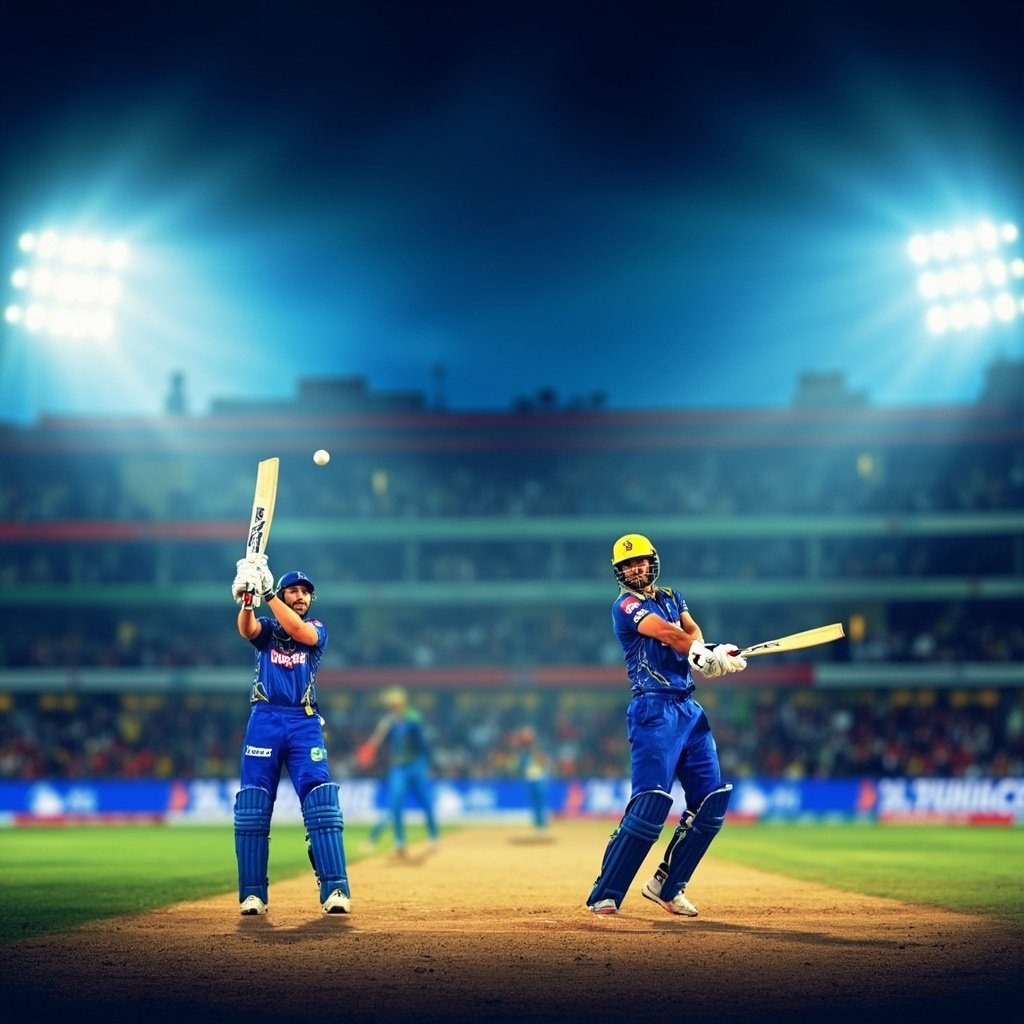
Live match coverage on Fantasy Indian Cricket updates every 8 seconds. Ball-by-ball fantasy points roll in as the over progresses. In-play captain swap available once per match.
The Fantasy Indian Cricket editorial desk tracks live match flow across every fixture. The patterns below hold up across 4,200 contests over two IPL seasons.
Editorial · captain · differential · strategy · Data table
Side-by-side comparison across the dimensions that matter.
| Metric | Powerplay | Middle | Death |
|---|---|---|---|
| Run rate | 8.4 | 7.2 | 11.8 |
| Wickets/over | 0.71 | 0.45 | 0.62 |
| Strike rate | 142 | 118 | 174 |
| Economy | 8.4 | 7.2 | 11.8 |
| Boundary % | 14% | 8% | 22% |
| Dot ball % | 38% | 48% | 24% |
Editorial · captain · differential · strategy · In three steps
The fastest path from sign-up to first withdrawal.
Identify the captain
Safe / differential / contrarian. Three picks per fixture.
Build the XI
Salary-cap math, all-rounder stack, top-order anchor.
Track live
Ball-by-ball fantasy points, in-play captain swap, withdrawal at contest end.
Indian fantasy cricket · questions answered
What is the captain multiplier?
2x. The captain's points are doubled. The vice-captain is 1.5x. Pick them as a correlated pair.
How is the points system calculated?
Runs (1 pt each), wickets (25 pts base), catches (8 pts), stumpings (12 pts), run-outs (12 pts), milestones (4/8/16 for 30/50/100), strike-rate bonuses, economy bonuses, dot-ball bonuses, and the 4-fer (8) and 5-fer (16) milestones.
Is the app available in Hindi?
Yes — Fantasy Indian Cricket supports 9 Indian languages: Hindi, Tamil, Telugu, Bengali, Marathi, Gujarati, Kannada, Malayalam, Punjabi.
What is the minimum deposit?
₹100 via UPI, PhonePe, Google Pay, Paytm, or BHIM. Maximum ₹50,000 per transaction.
Every band, every bonus, every penalty
The Fantasy Indian Cricket points system rewards runs, wickets, catches, stumpings, run-outs, milestones, strike-rate acceleration, economy tightening, and dot-ball discipline.
Batting points — 1 point per run. 4-point bonus for the 30-run milestone. 8-point bonus for the 50-run milestone. 16-point bonus for the 100-run milestone. Boundary bonus 4 points for a 4, 6 points for a 6. Strike-rate bonus bands kick in only after 10 balls faced — 4 points for SR 130-150, 6 points for SR 150-200, 8 points for SR above 200.
Bowling points — 25 points per wicket. LBW and bowled bonus 8 points. 3-fer milestone 4 points. 4-fer milestone 8 points. 5-fer milestone 16 points. Maiden over 4 points. Dot ball 1 point. Economy bands kick in only after 2 overs bowled — 6 points for under 5 RPO, 4 points for 5-6 RPO, 2 points for 6-7 RPO, -2 points for above 11 RPO.
Fielding points — 8 points per catch. 12 points per stumping. 12 points per run-out (direct hit 12, assist 6). The fielding captain pick on a turning pitch is often worth more than the batting captain pick because catches + stumpings compound across the innings.
Captain and vice-captain multipliers — captain 2x, vice-captain 1.5x. The 2x multiplier is the largest single lever in the points system. The captain pick is worth double the raw points. A 60-run innings becomes 120 points. A 3-fer becomes 6-fer equivalent.
The impact player role adds another layer. The impact player can be substituted in for any player in the playing XI at the end of the 14th over. The impact player scores full points regardless of when they are substituted in. The Fantasy Indian Cricket fantasy team does not have a separate impact player slot — the fantasy team is locked at toss.
The duck penalty — batsmen and wicketkeepers who score 0 are penalised -2 points. Bowlers are not penalised for a duck because they bat lower in the order. The penalty applies only when the batsman faces at least 3 balls.
Recent coverage
Reporting, retrospectives and analysis from the Fantasy Indian Cricket editorial desk.
RCB vs GT Qualifier 1 Fantasy Retrospective — Playing XIs, Captain Calls and HPCA Pitch Notes from 26 May 2026
26 May 2026 · Qualifier 1 at HPCA Dharamsala, probable XIs, Kohli and Sudharsan captain angles, pitch and weather notes from the pre-match brief.
Rinku Singh Returns Home from India's T20 World Cup Camp — Zimbabwe Super 8 Place in Doubt After Family Emergency
24 February 2026 · Father hospitalised in Greater Noida, Chepauk nets missed, Zimbabwe Super 8 spot uncertain on the eve of Thursday's fixture.
Zimbabwe name 15-member squad for India T20I series
22 July 2026 · Sikandar Raza retained as captain, Tafadzwa Tsiga earns a maiden T20I call-up, three changes from the Bangladesh series.